
Non Contact Flow Meters
A non-contact flow meter measures liquid flow from outside the pipe, without inserting a sensor into the fluid or opening the system. Micronics clamp-on ultrasonic meters send signals through the pipe wall to calculate flow velocity and volume, allowing permanent monitoring or temporary surveys without cutting pipework, draining the line or interrupting the process.
The range includes transit-time meters for clean liquids and Doppler instruments for liquids containing suspended solids or bubbles, with portable and fixed options for different monitoring requirements.
Showing all 9 results
-
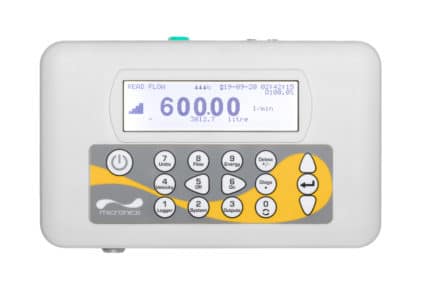
New Portaflow 222 Portable Clamp-on Flow Meter
Read more -
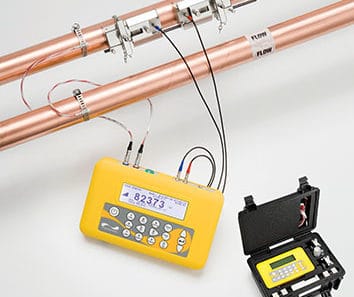
New Portaflow 333 Portable Clamp-on Flow & Heat Meter
Read more -
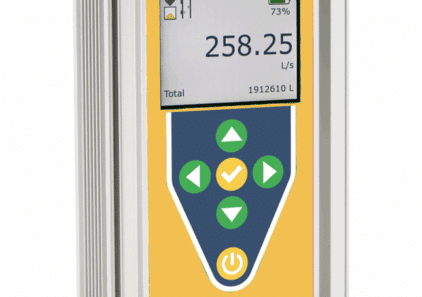
Portaflow D650 Doppler Flow Meter
Read more -
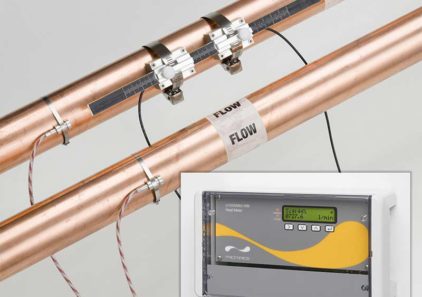
U1000MKII-HM-WM Clamp-on Heat/Energy Meter with Wall Mounted Keypad & Display
Read more -
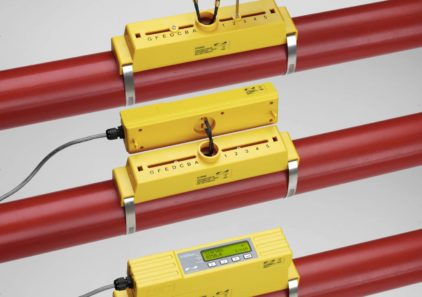
U1000MKII-FM Fixed Clamp-on, Ultrasonic Flow Meter
Read more -
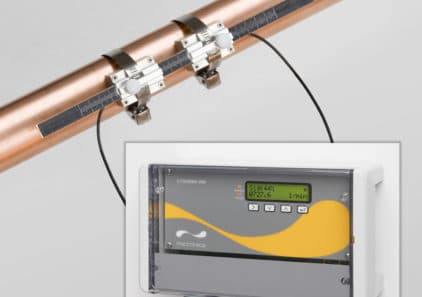
U1000MKII-FM-WM Clamp-on Flow Meter with Wall Mounted Keypad & Display
Read more -

New UF3300 Fixed Clamp-on, Heat/Energy, Flow and Process Measurement Meter
Read more -
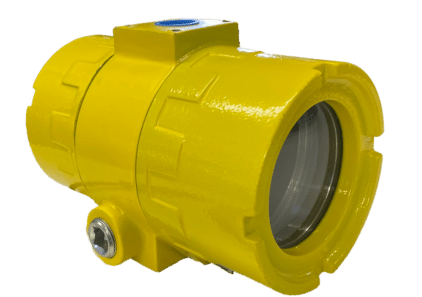
New UX5000 Hazardous Area Flowmeter
Read more -

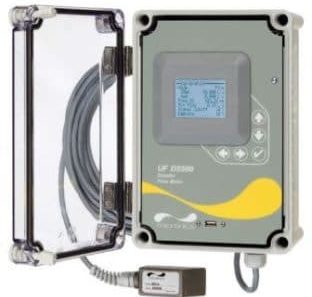
New: UF D5500 Fixed Clamp-on Flow Meter
Read more
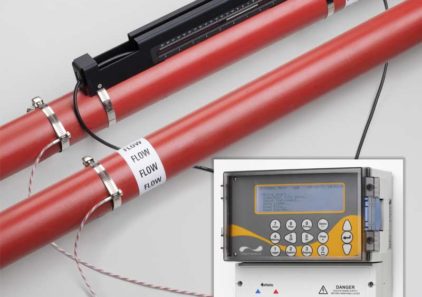
What is a Non Contact Flow Meter?
Because the sensors remain outside the pipe, non-contact meters are also described as clamp-on or non-invasive flow meters. They are useful where the pipe must remain sealed, process interruption should be minimised or temporary measurement is required.
How Non-Contact Flow Meters Work
Clamp-on ultrasonic meters transmit signals through the pipe wall and liquid. Transit-time instruments compare signals travelling with and against the flow and are normally selected for cleaner liquids. Doppler instruments measure frequency changes in echoes from bubbles or suspended solids and can suit many dirty-water or wastewater applications.
Why Choose Non Invasive Flow Measurement?
Clamp-on meters can be fitted without opening the pipe, making them useful for existing systems and applications where draining or cutting pipework would cause disruption. With no moving parts in contact with the liquid, routine servicing can be carried out from outside the pipe and there is no obstruction in the flow path.
Typical Applications
Non contact flow meters are widely used in:
- Building services for heating and cooling circuits
- Water and wastewater management
- Energy monitoring in district heating and cooling networks
- Chemical and process industries where fluids may be hazardous
- Survey and commissioning work, using portable clamp-on models
Reliable Measurement Without Pipework Disruption
Whether the requirement is continuous monitoring or a short-term survey, the correct meter depends on the pipe, liquid condition, measurement range and required outputs. Compare the Micronics portable, fixed, transit-time and Doppler options or contact the team with the application details.
Choosing Transit-Time or Doppler Measurement
Add immediately before the application list: Transit-time instruments are generally used where the liquid is clean enough for an ultrasonic signal to travel between sensors. Doppler instruments require bubbles or suspended particles that can reflect the signal. Confirm the liquid condition, pipe details and required measurement before choosing a method.
Non-Contact Flow Meter FAQs
Answers to common questions about non-contact flow measurement, suitable liquids, installation and product selection.
What is a non-contact flow meter?
A non-contact flow meter measures liquid flow using sensors mounted on the outside of a pipe. The sensors do not enter the liquid, so installation can often be completed without cutting into the pipe or interrupting the process.
How accurate are non-contact flow meters?
Performance depends on correct meter selection and installation, accurate pipe dimensions, pipe material, liquid condition and a suitable sensor position. Check the product-specific accuracy for the application rather than assuming one figure for every installation.
Can a non-contact flow meter measure dirty water?
Yes, in suitable applications. Doppler instruments use signals reflected by suspended solids or bubbles and are often selected for dirty water or wastewater. Transit-time instruments are normally preferred for cleaner liquids.
Does a clamp-on flow meter require the pipe to be cut?
No. Clamp-on sensors are attached to the outside of the existing pipe, so the pipe normally remains sealed and the system does not need to be drained for installation.
Should I choose a portable or fixed non-contact flow meter?
Choose a portable meter for temporary surveys, commissioning or checks at multiple locations. Choose a fixed meter when continuous measurement, permanent outputs or connection to another monitoring system is required.