
Ultrasonic Water Meters
Ultrasonic Water Meters
Micronics ultrasonic water meters use clamp-on sensors to measure water flow from outside the pipe. Because installation does not require the pipe to be cut or the system to be drained, they can reduce disruption, installation work and future servicing requirements compared with many traditional inline meters.
The range includes fixed instruments for continuous monitoring and suitable outputs for connection to energy, building-management or data-logging systems. Product suitability depends on the pipe, water condition, temperature and required measurement task.
Showing all 6 results
-
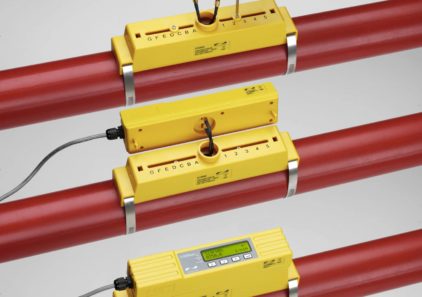
U1000MKII-FM Fixed Clamp-on, Ultrasonic Flow Meter
Read more -
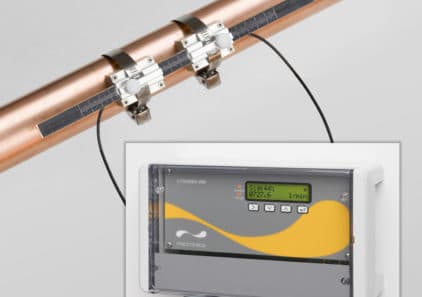
U1000MKII-FM-WM Clamp-on Flow Meter with Wall Mounted Keypad & Display
Read more -
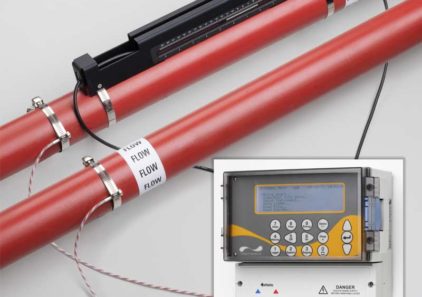
New UF3300 Fixed Clamp-on, Heat/Energy, Flow and Process Measurement Meter
Read more -
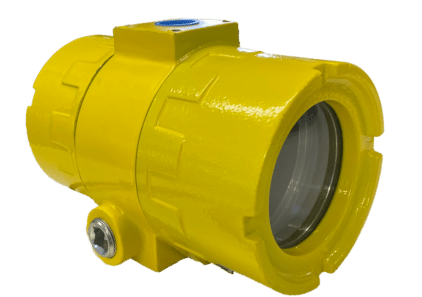
New UX5000 Hazardous Area Flowmeter
Read more -
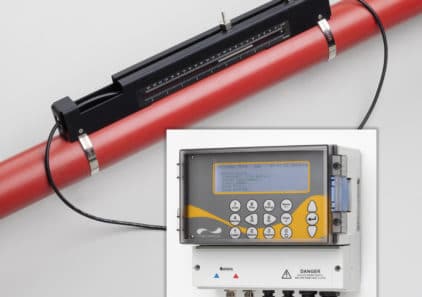
UF3300 NEW Ultraflo, Fixed Clamp-on Flow and Process Measurement Meter
Read more -
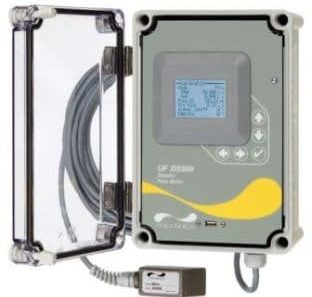
New: UF D5500 Fixed Clamp-on Flow Meter
Read more
How Clamp-on Ultrasonic Water Meters Work
Clamp-on sensors transmit ultrasonic signals through the pipe wall and water. A transit-time meter compares the travel time of signals moving with and against the flow, then uses the result with the pipe dimensions to calculate flow rate and volume. Correct pipe information and sensor positioning are important, and high levels of entrained air or suspended material can affect suitability.
A water meter is selected specifically for water measurement, while “flow meter” is a broader term covering instruments for different liquids and, with suitable technologies, gases. This page should remain focused on clamp-on water-flow measurement.
Ultrasonic Water Meter FAQs
Answers to common questions about clamp-on ultrasonic water meters, including operation, applications, installation and product selection.
What is an ultrasonic water meter?
An ultrasonic water meter uses ultrasonic signals to calculate water flow. Clamp-on models position the sensors outside the pipe, avoiding moving parts in the water and allowing suitable systems to be monitored without cutting into the line.
What are the benefits of a clamp-on ultrasonic water meter?
Clamp-on installation can reduce disruption because the pipe normally remains sealed and does not need to be drained. With no moving parts in contact with the water, servicing can also be carried out from outside the pipe.
Where are ultrasonic water meters typically used?
They are used in applications such as commercial buildings, industrial water systems, HVAC circuits, water treatment and network monitoring. The selected meter must suit the pipe, water condition, temperature and required measurement task.
Do ultrasonic water meters require pipework modifications?
Clamp-on ultrasonic water meters are fitted to the outside of the pipe, so they normally do not require the pipe to be cut. Installation still needs a suitable straight pipe section, correct pipe information and careful sensor positioning.
What information is needed to choose an ultrasonic water meter?
Provide the pipe outside diameter, material, wall thickness and lining, water condition and temperature, expected flow range, available straight pipe length, fixed or portable requirement, outputs and any required metering approval.
CASE STUDY
Bristol Water
It is a requirement of the regulator and the Environment Agency that the flow and quality of waste water from drinking water treatment plants are monitored when discharging into water courses such as rivers and streams. Bristol Water has supplied drinking water for over 167 years and serves a population of 1.1 million people and all the associated businesses in an area of 2,400 square kilometres centred on Bristol.
TESTIMONIAL
“Because mechanical parts do not need to be inserted through the pipe wall or to protrude into the flow system, installation took just a few minutes and there was no need to shut down flow or drain the system, making it extremely cost effective and practical.”
Bristol Water