
Water Level Meters and Ultrasonic Level Sensors
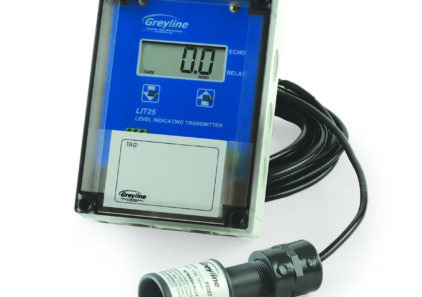
Micronics water level meters provide continuous level monitoring for tanks, wells and water or wastewater applications. The range includes the LIT-25 Level Indicating Transmitter, which can be used with a non-contact ultrasonic sensor or an optional pressure sensor to suit different measurement conditions.
An ultrasonic level sensor measures the distance to the liquid surface without coming into contact with the water. Used as part of a complete water level monitoring system, it can provide a clear local reading and a 4-20mA output for connection to compatible control or monitoring equipment. This makes the LIT-25 suitable for applications including storage tanks, treatment processes, pump control and environmental water monitoring.
Showing the single result
How Does an Ultrasonic Water Level Sensor Work?
An ultrasonic water level sensor sends a sound pulse towards the surface of the liquid and measures the time taken for the echo to return. The instrument uses this measurement to calculate the distance between the sensor and the liquid surface, allowing the water level to be displayed and monitored.
Because the ultrasonic sensor does not need to touch the liquid, it can reduce fouling and routine maintenance in suitable applications. The LIT-25 also supports an optional pressure sensor, giving users another measurement approach where site or process conditions make it more appropriate.
Water Level Monitoring with the LIT-25
The LIT-25 is a level indicating transmitter designed for straightforward monitoring and control. It combines a large four-digit LCD with a built-in two-button calibrator, an isolated 4-20mA output and a programmable signal relay. The relay can be configured for functions including a level alarm, echo-loss alarm, pump control or temperature alarm.
Its NEMA 4X/IP67 polycarbonate enclosure is designed to protect the electronics from water and dust. When used with the ultrasonic sensor, an integrated temperature probe helps compensate for changing temperatures. The published accuracy is ±0.25% of range or 2 mm, whichever is greater.
Where Are Water Level Meters Used?
Water level meters and sensors can support monitoring and control across a range of water, wastewater and industrial settings, including:
- Storage and process tanks – monitor liquid level and support high- or low-level alarms.
- Water and wastewater treatment – help operators monitor tanks, sumps and treatment processes.
- Pump control – use the programmable relay as part of a suitable control arrangement.
- Wells and environmental monitoring – track changing water levels where the selected sensor and installation are appropriate.
- Chemical and process liquids – use an ultrasonic or pressure sensor selected for the application and liquid conditions.
Micronics can help assess the required measurement range, sensor type, liquid conditions, installation position and output requirements before a system is selected.
Water Level Meter, Sensor or Transmitter: What Is the Difference?
These terms describe different parts of a level-monitoring arrangement. The sensor detects the liquid level, while a transmitter processes the measurement and provides a usable output. “Water level meter” is often used as a broader term for the complete measurement system, including the sensor, display and output.
The LIT-25 is a level indicating transmitter. It can be paired with a non-contact ultrasonic sensor or an optional pressure sensor, displays the reading locally and provides a 4-20mA signal for compatible external equipment. Explaining the required application to Micronics will help ensure that the correct sensor and configuration are specified.
Choosing the Right Water Level Monitoring System
Before selecting a water level meter, consider the minimum and maximum measurement distance, the type of liquid, possible foam or vapour, the mounting position, temperature changes and the required output or alarm functions. Accessibility, enclosure protection and the need for non-contact measurement should also be reviewed.
For help selecting a water level sensor and transmitter for your application, contact Micronics with details of the vessel or measurement point, liquid, level range and control requirements.
Need help choosing a water level meter or ultrasonic level sensor? Request a quote or speak to Micronics about your application.
Water Level Meter FAQs
Answers to common questions about water level meters, ultrasonic level sensors and the Micronics LIT-25 Level Indicating Transmitter.