
Water Flow Meters
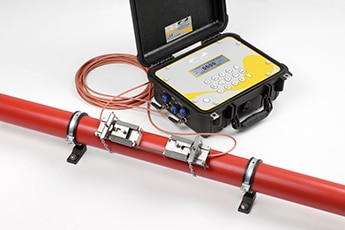 What are Water Flow Meters?
Water flow meters are devices used to measure the volume or mass of fluid that passes through a pipe. They are commonly used in water treatment and distribution systems, irrigation, and industrial processes.
Different pieces of equipment require different flow rates, which is why it’s important to use a water flowmeter to determine the water meter flow rate. Water flow meters can measure hot water, cold water, clean water, dirty water, and slurries. Depending on the type of meter you chose, water flow meter applications can vary. While some meters are designed to measure the flow of oils and lubrications, others are designed to work in pharmaceuticals and wastewater treatment facilities.
See our range of industrial water flow meters
Showing all 5 results
-
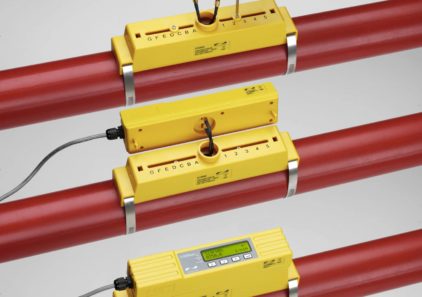
U1000MKII-FM Fixed Clamp-on, Ultrasonic Flow Meter
Read more -
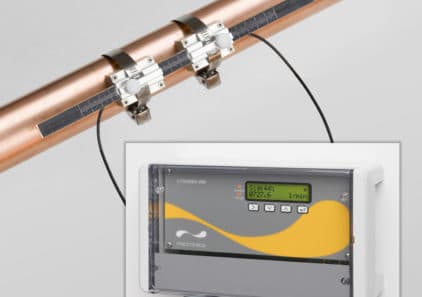
U1000MKII-FM-WM Clamp-on Flow Meter with Wall Mounted Keypad & Display
Read more -
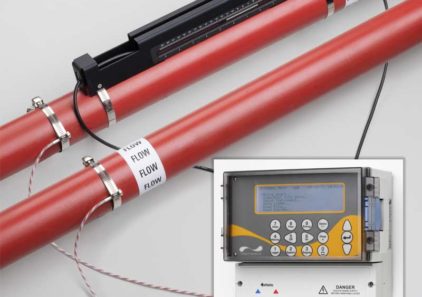
New UF3300 Fixed Clamp-on, Heat/Energy, Flow and Process Measurement Meter
Read more -
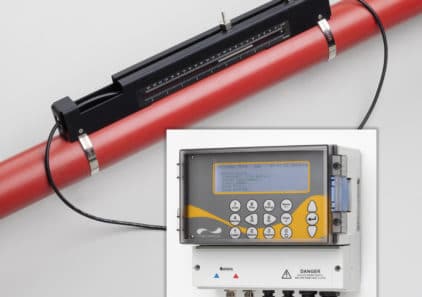
UF3300 NEW Ultraflo, Fixed Clamp-on Flow and Process Measurement Meter
Read more -
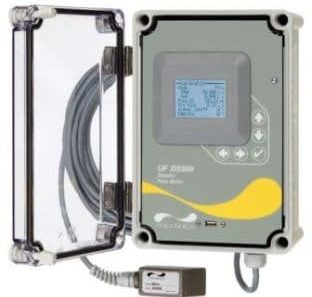
New: UF D5500 Fixed Clamp-on Flow Meter
Read more
There are several types of water flow meters, including positive displacement meters, turbine meters, ultrasonic meters, and magnetic meters.
Positive displacement meters work by trapping a fixed volume of fluid and then measuring the number of times the trapped volume is filled and emptied. Turbine meters measure flow by detecting the rotations of a rotor in the flow stream. Ultrasonic meters, utilising sound waves to measure fluid velocity, exemplify cutting-edge technology in flow meter water applications. While magnetic meters use the interaction between a magnetic field and metal components in the fluid to determine flow rate. Accurate water flow measurement is crucial for water management and helps ensure efficient use of resources while reducing waste.
Advantage of Ultrasonic Water Meters
Ultrasonic water flow-meters are only measuring water, so air in the pipelines does not get measured. Therefore removing any error or possible manipulation of meter readings.
With no moving parts an ultrasonic meter has no mechanical wear and tear and so will require less maintenance.
Water Meters and Flow Meters:
Though these terms are often quite interchangeable, whilst all water meters are flow meters, not all flow meters are water meters.
The main difference being that a water meter measures the volume of water that passes through the meter. A flow meter will measure the speed (flow rate) at which liquid passes through the meter.
Ultrasonic Water Meters – See Our Full Range
Micronics Flow Meters on LinkedIn
Explore more of our diverse range of products and services:
- Water Flow Meters – Discover our variety of water flow meters suitable for multiple applications.
- General Water Flow Meter Info – Learn more about our solutions in water flow metering.
- Flow Switches – Explore our flow switches for water and environmental applications.
- Ultrasonic Flow Meters – Learn about our advanced ultrasonic flow meters.
- Ultrasonic Liquid Flow Meters – Find high-precision liquid flow measurement solutions.
- Flow Sensors – View our robust and efficient flow sensors.
- Flow Meter Services – Get professional services for your flow meter needs.
- Types of Flow Meters – Educate yourself on different types of flow meters available.
- Inline Flow Meters – Check out our inline flow meters for precise measurements.
- Level Meters – Explore our level meters for water and environmental monitoring.
- Portable Flow Meters – Discover portable solutions for on-the-go flow measurement.
- Flow Meter Installation – Discover how to correctly install a flow meter for optimal performance.
Water Flow Meter FAQs
Answers to common questions about water flow meters, including how they work, where they are used, and how to choose the right flow measurement solution for your application.
What are water flow meters used for?
Water flow meters are used to measure the movement and volume of water flowing through a pipe or system. Flow meters for water are commonly installed in commercial buildings, industrial facilities, HVAC systems, water treatment plants, and energy management applications to support monitoring, efficiency improvements, leak detection, and process control.
What is an industrial water flow meter?
An industrial water flow meter is designed for demanding environments where accurate and reliable water flow measurement is essential. These systems are used across manufacturing, utilities, process industries, and large-scale building services to monitor flow rates, optimise operations, and maintain system performance under varying operating conditions.
What is the difference between a water flow counter and a flow meter?
A water flow counter typically records the total volume of water passing through a system over time, while a flow meter water device measures the flow rate at a given moment. Many modern water flowmeters combine both functions, allowing users to monitor real-time flow data alongside cumulative consumption readings.
Are clamp-on water flowmeters accurate?
Yes, modern clamp-on water flowmeters can provide highly accurate results when properly installed and configured. Ultrasonic clamp-on technology measures flow externally through the pipe wall, making it a non-invasive solution that reduces installation time, minimises downtime, and avoids cutting into existing pipework.