
Water Flow Meters & Sensors
What are Water Flow Meters?
Water flow meters are devices used to measure the volume or mass of fluid that passes through a pipe. They are commonly used in water treatment and distribution systems, irrigation, and industrial processes. There are several types of water flow meters, including positive displacement meters, turbine meters, ultrasonic meters, and magnetic meters.
Water Flow Sensors
A water flow meter and a water flow sensor are similar in that they both measure the flow rate of water in a pipe. However, there is a difference between the two:
- A water flow meter measures the total volume of fluid that has passed through a pipe over a certain period of time. It is typically used to determine the amount of fluid that has been used, consumed, or produced.
- A water flow sensor, on the other hand, measures the velocity of the fluid flow at a specific point in time. It is mainly used to monitor the flow rate in real-time, to detect any changes or irregularities in the flow, and to control or regulate the flow as needed.
Water Flow Sensor vs. Water Flow Meters
A water flow sensor and a water flow meter are similar in many ways, but they serve different functions:
- A water flow meter measures the total volume of water passing through a pipe over a given period. It is typically used for billing purposes or to track overall consumption. These meters are especially important in systems that require accurate water meter flow rate data.
- A water flow sensor, on the other hand, focuses on the real-time velocity of water. It can detect sudden changes in the flow rate, making it ideal for monitoring and controlling water flow in dynamic systems, such as irrigation systems or industrial applications.
Both water flow sensors and flow meters for water are integral to managing water usage, ensuring efficiency, and preventing costly overuse or leaks.
How a Water Flow Counter Works
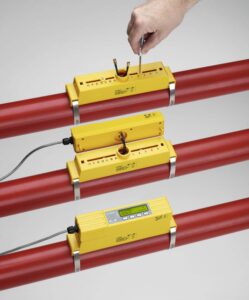
A water flow counter operates by detecting the movement of water through a pipe and converting this data into readable flow rates. The most advanced models, including water flow meters, use ultrasonic technology to deliver accurate, non-invasive measurements without disrupting the pipeline. These counters are ideal for applications that require real-time flow monitoring and reporting, helping businesses and municipalities ensure efficiency in their operations.
Advantages of Ultrasonic Water Meters
Ultrasonic flow meters, which are a type of digital water flow meter, offer several advantages over traditional meters, particularly in non-invasive applications. Here are some of the key benefits:
- Non-invasive measurement: Ultrasonic meters, unlike mechanical meters, don’t have any moving parts that contact the water, making them ideal for measuring both clean and dirty water, or even abrasive liquids.
- High accuracy: These meters provide precise water flow rate sensor data, even at low-flow conditions, making them crucial in applications where consistent measurement is essential.
- Real-time monitoring: An ultrasonic digital water flow meter offers real-time flow rate measurements, ensuring quick detection of any changes or irregularities.
- Low maintenance: Without moving parts, ultrasonic flow meters require less maintenance and are more reliable over the long term compared to traditional industrial water flow meters.
The difference between Water Meters and Flow Meters
Though they are often used interchangeably, there’s a clear distinction between water meters and flow meters:
- A water meter specifically measures the amount of water used over time, which is critical for billing in residential, commercial, and industrial settings.
- A flow meter, on the other hand, measures the rate at which water (or other liquids and gases) moves through a pipe, which is often referred to as the flow rate meter. While all water meters are a type of flow meter, not all flow meters are used for water.
 What is a digital water flow meter?
A digital water flow meter is an electronic device that measures the flow rate of water in pipes or channels. It uses sensors to detect the movement of water, and then converts this information into a digital signal that can be read by a display or transmitted to a computer system for analysis.
The device typically consists of a flow sensor, installed in the water supply line, and a display unit, which shows the flow rate in real-time. Some digital water flow meters also have the ability to record flow data over time, allowing users to analyse usage patterns and identify areas where water conservation measures could be applied.
Digital water flow meters are commonly used in residential, commercial, and industrial settings to monitor water usage, detect leaks, and optimise water management systems. They are an important tool for water conservation efforts, as they can help identify inefficiencies and waste in water distribution networks.
Digital Water Flow Sensors
Digital water flow sensors are ideal for systems that need precise, real-time data. These sensors integrate easily with building management systems and can help improve efficiency, reduce waste, and support remote monitoring.
Water flow rate meters
A flow rate meter is a device specially designed to measure and quantify the rate of water flow within a conduit, pipe, or channel. It provides vital information about the volume of water passing through a particular point over a defined period. Water flow rate meters are critical tools in various contexts, including residential, commercial, and industrial applications, as they enable efficient water management, leak detection, billing accuracy, and overall system optimisation. These meters can employ different technologies, such as ultrasonic, mechanical, electromagnetic or vortex, to accurately measure water flow rates and provide actionable data for decision-making
What are the two main types of water meters?
At Micronics, the focus is on two primary types of water meters: ultrasonic and magnetic flow meters. Ultrasonic meters use sound waves to measure flow, ideal for non-invasive installation and accurate readings in clean or dirty water. Magnetic flow meters, on the other hand, measure the velocity of water using magnetic fields, making them perfect for various industrial applications. Both options provide reliable, maintenance-free solutions for water flow measurement.
Explore more of our diverse range of products and services:
- Water Flow Meters – Discover our variety of water flow meters suitable for multiple applications.
- General Water Flow Meter Info – Learn more about our solutions in water flow metering.
- Flow Switches – Explore our flow switches for water and environmental applications.
- Ultrasonic Flow Meters – Learn about our advanced ultrasonic flow meters.
- Ultrasonic Liquid Flow Meters – Find high-precision liquid flow measurement solutions.
- Flow Sensors – View our robust and efficient flow sensors.
- Flow Meter Services – Get professional services for your flow meter needs.
- Types of Flow Meters – Educate yourself on different types of flow meters available.
- Inline Flow Meters – Check out our inline flow meters for precise measurements.
- Level Meters – Explore our level meters for water and environmental monitoring.
- Portable Flow Meters – Discover portable solutions for on-the-go flow measurement.
Water Flow Meter & Sensor FAQs
Answers to common questions about water flow meters and sensors, including how they work, how flow rates are measured, and where digital flow monitoring systems are used.
What is a water flow meter?
A water flow meter is a device used to measure the movement, volume, or flow rate of water within a pipe or system. Water flow meters are widely used across commercial buildings, industrial facilities, HVAC systems, and water management applications to help monitor consumption, improve efficiency, and detect abnormal flow conditions.
How does a water flow meter work?
Understanding how a water flow meter works depends on the meter technology being used. Ultrasonic flow meters measure flow using sound waves, while mechanical meters use moving internal components to calculate water movement. A digital water flow meter can provide real-time monitoring, data logging, and remote communication features for more advanced system analysis.
What is a water flow rate sensor used for?
A water flow rate sensor is used to monitor and measure the speed or volume of liquid moving through a system. Liquid flow rate sensors are commonly installed in water treatment systems, industrial processes, cooling systems, and energy management applications where accurate flow data is important for system control and performance monitoring.
How do you use a water flow meter?
Knowing how to use a water flow meter involves installing the device correctly, configuring it for the pipe size and application, and monitoring the displayed flow data. Many modern flow rate meters provide digital displays, outputs, and data logging functions that allow users to track water meter flow rate performance, identify inefficiencies, and support preventative maintenance.
CASE STUDY
Golden Jubilee Hospital
The Golden Jubilee Hospital in Clydebank, Scotland used a Micronics Portaflow 330 flowmeter to measure the water flow through hot and cold water pipes throughout the estate. Andrew Gallagher, NHS Scotland’s Estates Officer discovered the Portaflow 330 through a simple web search and has been very satisfied with his discovery.
TESTIMONIAL
“I initially chose it because it meant that there was no need to cut into pipes – vital in a busy hospital – which, in turn meant that installation costs were minimal because the system did not need to be drained down or pipes cut into. We have found the accuracy of the data delivered to be excellent.”
Andrew Gallagher